

- 1. My Story: Where It All Started
- 2. The Truth About Hair Loss After 40
- 3. Why Hormones Weren’t the Answer (At Least for Me)
- 4. The Inflammation Factor: What No One Tells You
- 5. Dormant Follicles Are Not Dead Follicles
- 6. How Peptides Changed the Game
- 7. The Difference Between Gimmicks and Science
- 8. What I Use Now (and Why It’s Working)
- 9. What to Expect: Month by Month
- 10. Final Words: You’re Not Alone
1. My Story: Where It All Started

I didn’t wake up one day and suddenly see it. It happened gradually, quiet, almost unnoticeable at first. A little more scalp peeking through. Hair that didn’t hold volume like it used to. A growing sense that something was off, even if no one else seemed to notice yet.
I tried to be proactive. Swapped products. Doubled up on biotin. Bought into every new promise: serums, gummies, silk pillowcases. I told myself it was just a phase, but deep down, I feared it wasn’t.
People around me chalked it up to age, hormones, or “just one of those things.” But I couldn’t shake the feeling that there was more to the story, and that my hair was trying to tell me something I hadn’t yet understood.
2. The Truth About Hair Loss After 40
Hair loss after 40 isn’t just about estrogen or menopause. It’s about your scalp’s environment, inflammation, circulation, and the health of your follicles. Think of your scalp like soil. If it’s inflamed or depleted, nothing can grow: not even your healthiest hair.
3. Why Hormones Weren’t the Answer (At Least for Me)
I was nervous about using hormone-based treatments. The risks, the side effects… I didn’t want to trade my hair for my peace of mind. And for many women, hormone therapies don’t even work long-term. I wanted a solution that helped my body restore itself, not override it.
4. The Inflammation Factor: What No One Tells You
Chronic inflammation silently damages your follicles. Stress, diet, and environmental triggers can inflame the scalp, making hair growth nearly impossible.
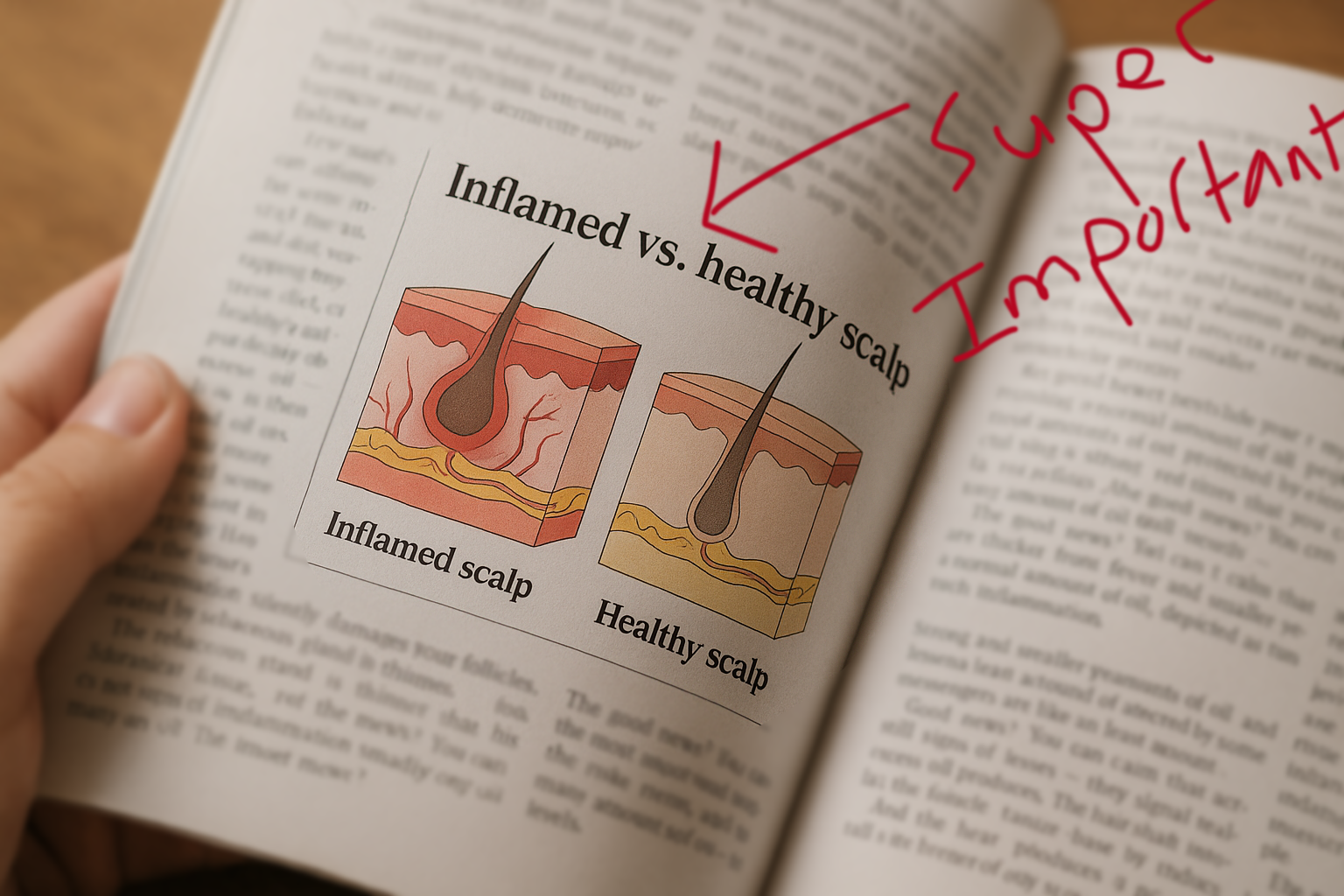
The good news? You can calm that inflammation.
5. Dormant Follicles Are Not Dead Follicles
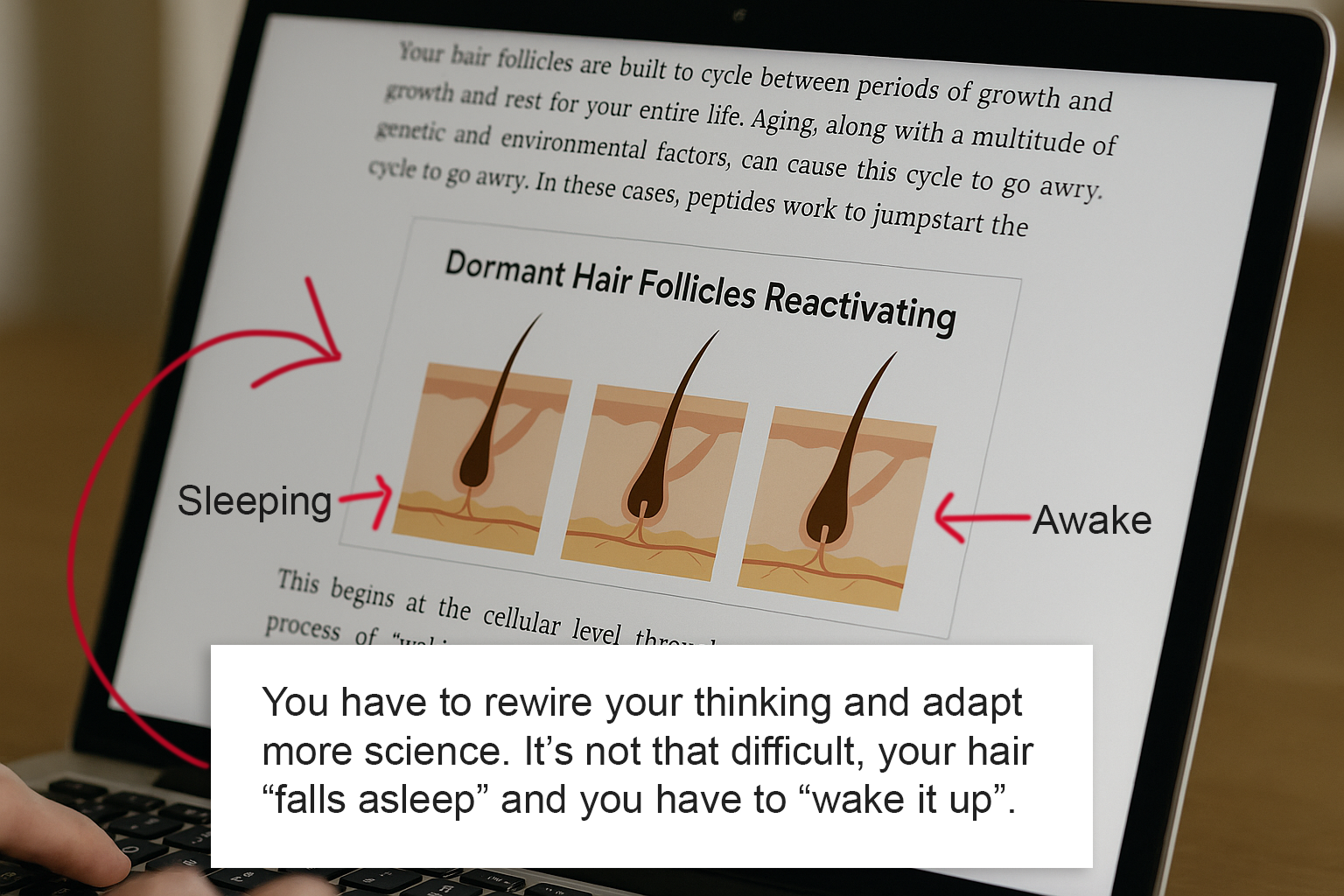
This gave me hope: your follicles don’t just die. They go dormant, and with the right signals, they can reactivate.
That’s when I discovered the role of peptides, tiny protein messengers that can communicate directly with follicles to restart the growth cycle.
6. How Peptides Changed the Game
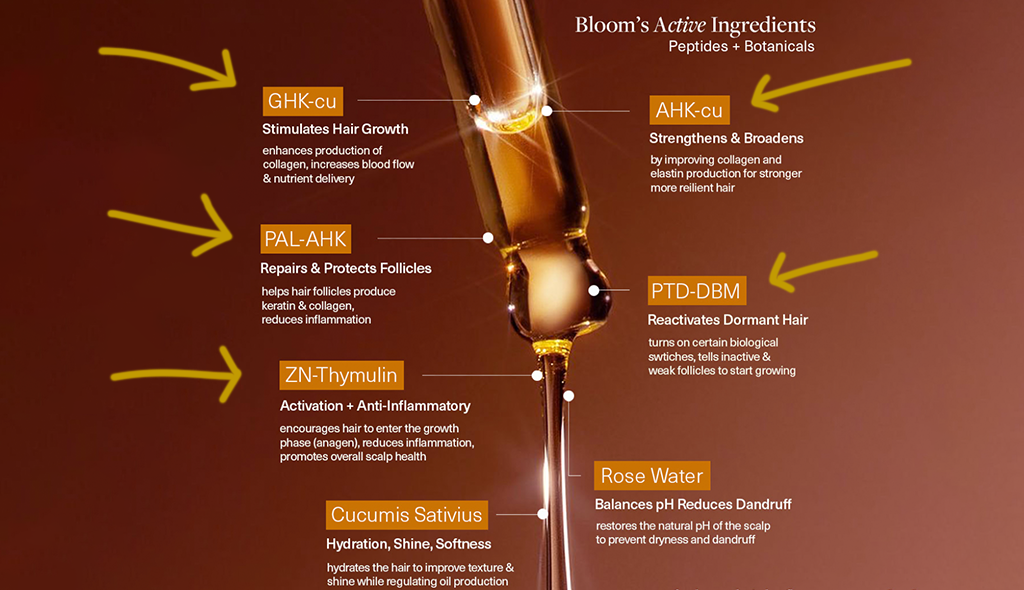
Peptides like GHK-Cu and Zinc Thymulin have been studied in skin regeneration for decades. But only recently have they been formulated into hair products that penetrate deeply and trigger regrowth.
What impressed me most was how they targeted inflammation and reawakened follicles, without messing with my hormones.
7. The Difference Between Gimmicks and Science
There are so many trendy “miracles” out there. Rosemary oil. Scalp massagers. Collagen gummies.
But what made the difference for me was biologically active ingredients. Not surface-level hydration, real follicle signaling.
8. What I Use Now (and Why It’s Working)
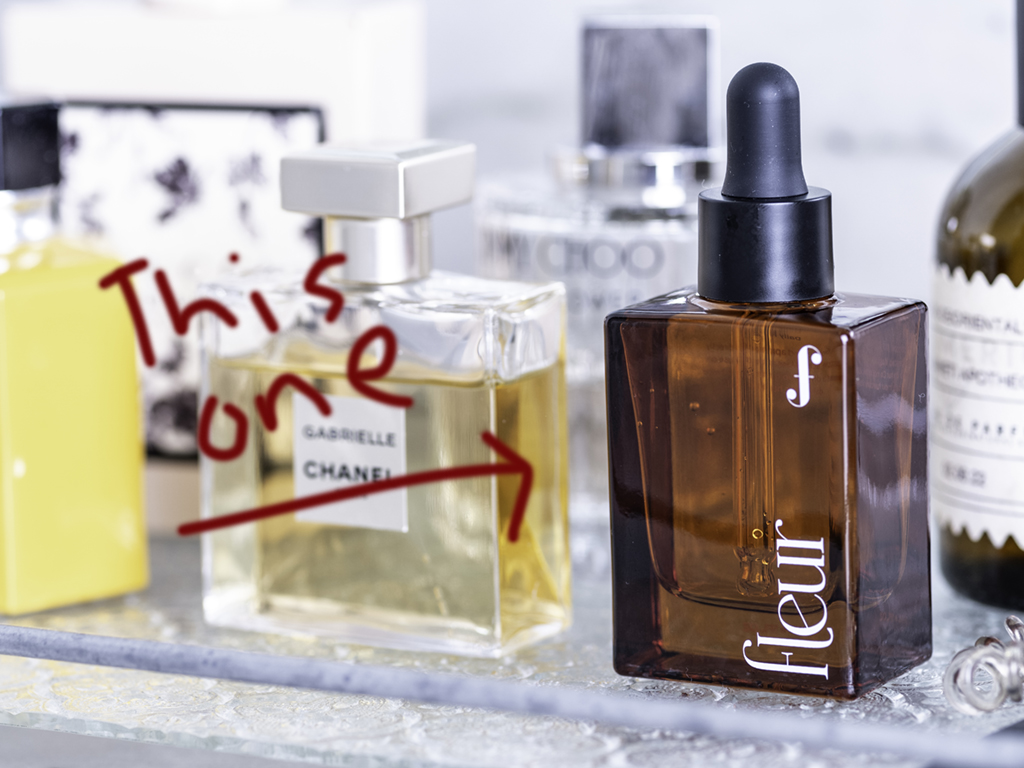
I’ve been using a serum that combines 6 clinical-grade peptides, including copper peptides, GHK Basic, and Zinc Thymulin. It also includes calming botanicals and zero hormones.
It’s designed for women like me, over 40, dealing with progressive thinning, and wanting results without side effects.
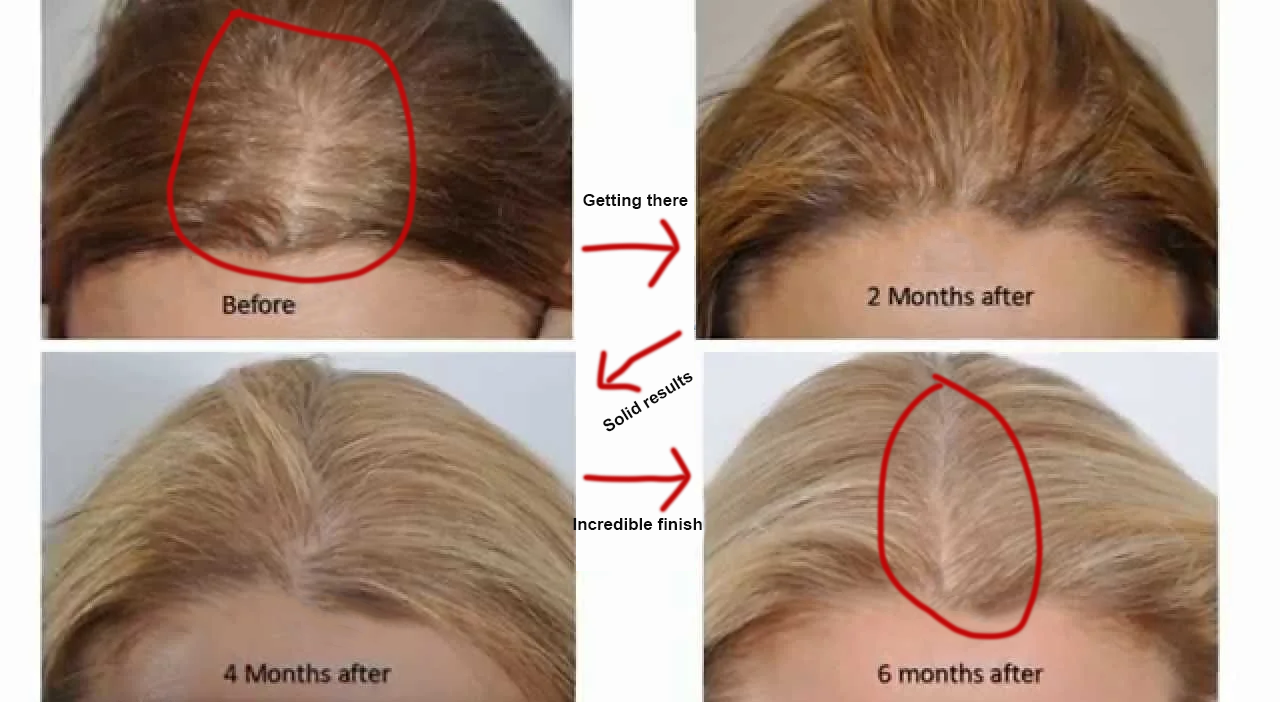
My temples have filled in. My part looks tighter. And most of all, I feel in control again.
9. What to Expect: Month by Month
- Month 1–2: Scalp feels calmer. Less itchiness and irritation. Slight reduction in shedding.
- Month 3–4: First signs of regrowth, tiny new hairs around the hairline. Texture felt stronger.
- Month 5–6: Fuller volume at the crown. No more visible scalp. Real confidence boost.
10. Final Words: You’re Not Alone
Hair loss made me feel invisible. Like I was fading.
But what I’ve learned, and what I hope this guide shows, is that you’re not stuck. You’re not broken. And you’re definitely not alone.
There’s real science. There’s hope. And yes, there’s a way forward.
Join the Conversation